“Train up a child in the way he should go: and when he is old, he will not depart from it.”
— Proverbs 22:6 (KJV)
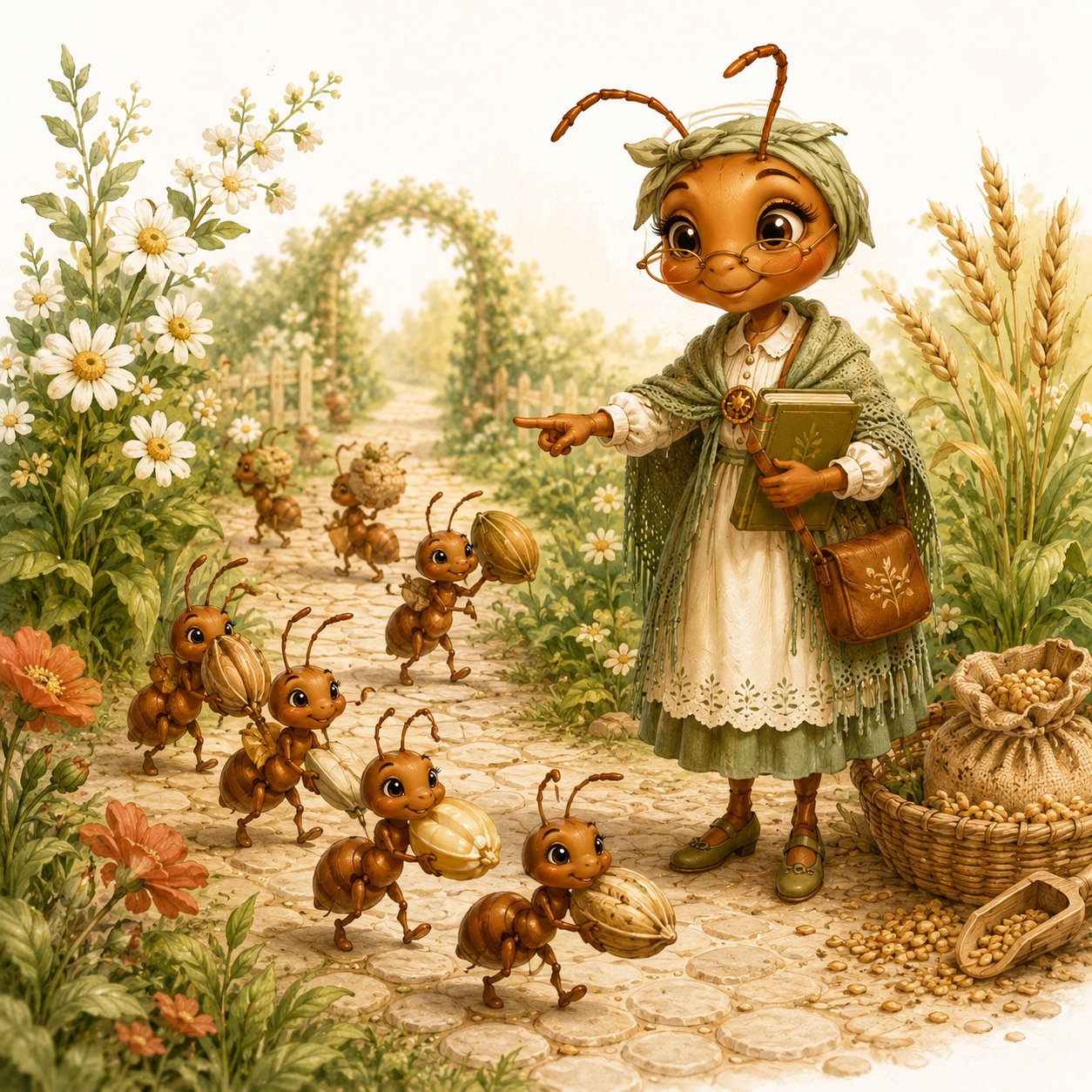
Diligence is one of those qualities every parent wants and no lecture produces. You cannot scold a child into loving good work any more than you can shout a seed into sprouting. Diligence is caught before it is taught — absorbed slowly from the adults a child walks beside. Which is exactly how it works in an ant colony: no ant attends a seminar. The young simply move with the colony, and the colony is always faithfully at work.
Start With What They See
Proverbs 6:6 says “go to the ant” — look first, learn second. Children do the same with us. They notice whether we finish what we start, whether we complain through our chores, whether Dad's promises hold and Mom follows through. Before adding a single chore chart, let your child watch you work faithfully at something and hear you say why: “We do it heartily, as to the Lord” (Colossians 3:23). One visible, cheerful, completed task teaches more than a month of reminders.
Make the Work Small and Real
An ant carries what an ant can carry. Children need tasks scaled to their strength but connected to real life — not invented busywork. A four-year-old can feed the dog; a seven-year-old can set the table; a twelve-year-old can cook a simple meal. Real contribution tells a child: the colony needs you. That sense of mattering is the root of diligence; children rarely work hard at things they believe are pointless.
Keep tasks consistent, too. Diligence is rhythm, not intensity. The same small job done every evening builds more character than a heroic cleanup twice a year.
Praise the Process, Not Just the Result
When you praise only outcomes, children learn to fear failure. When you praise faithful effort — “You stayed with that until it was done” — they learn that the working itself is the win. That is God's own emphasis: His commendation in the parable is “Well done, thou good and faithful servant” (Matthew 25:21), not “well done, thou impressive one.”
And when they fail or quit halfway — as every child will — respond with grace and a restart, not shame. The goal is a child who knows how to begin again, because beginning again is most of what diligence actually is.
Bring It Back to the Ant
Finally, make it fun. Watch an ant trail together on the sidewalk and count the trips one ant makes. Read Proverbs 6:6–8 out loud and ask, “Who tells the ant to work?” Let the wonder do the preaching. Mrs. Ant's fourteen-stone Wisdom Trail was built for exactly this — walking children step by small step from “God made me on purpose” to “walking in wisdom,” one faithful lesson at a time.
“Children learn diligence the way ants do — by walking beside someone who is already carrying something.”
— Mrs. Ant